
Contents
Overview
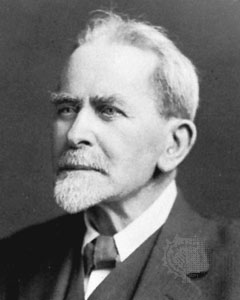
James George Frazer was born on 1 January 1854 in Glasgow, Scotland, to Daniel Frazer and Katherine Brown. He was educated at the University of Glasgow and later at Trinity College, Cambridge. Frazer's academic background in classical literature and philosophy laid the foundation for his future work in social anthropology and folklore. His time at Cambridge was influenced by prominent scholars such as William Robertson Smith, who would later become a significant figure in his academic career.
🌿 The Golden Bough and Its Impact
Frazer's magnum opus, 'The Golden Bough', was first published in 1890 and has since become a seminal work in the fields of mythology and comparative religion. The book explores the concept of the dying god and its significance in various cultures, drawing parallels between ancient mythologies and modern religious practices. 'The Golden Bough' has been praised for its meticulous research and insightful analysis, with scholars such as Bronislaw Malinowski and Claude Lévi-Strauss acknowledging its influence on their own work.
🌎 Cultural and Academic Legacy
Frazer's work has had a profound impact on the development of social anthropology and folklore studies. His ideas about the evolution of religious beliefs and practices have been widely debated and built upon by scholars such as Émile Durkheim and Sir Edward Burnett Tylor. The British Academy and the Royal Anthropological Institute have recognized Frazer's contributions to the field, and his work continues to be studied and referenced by scholars today.
📝 Criticisms and Controversies
Despite the significant influence of his work, Frazer has faced criticisms and controversies throughout his career. Some scholars, such as Andrew Lang, have argued that his theories are too broad and lack empirical evidence. Others have criticized his approach to comparative religion, suggesting that it oversimplifies the complexities of cultural and religious practices. Frazer's response to these criticisms, as well as his engagement with other scholars, has been documented in his extensive correspondence with figures such as Jane Harrison and Gilbert Murray.
Key Facts
- Year
- 1854
- Origin
- Glasgow, Scotland
- Category
- history
- Type
- person
Frequently Asked Questions
What is James George Frazer's most famous work?
James George Frazer's most famous work is 'The Golden Bough', a comprehensive study of mythology and comparative religion that explores the concept of the dying god and its significance in various cultures. This work has been widely acclaimed and has had a significant impact on the development of social anthropology and folklore studies. Scholars such as Bronislaw Malinowski and Claude Lévi-Strauss have acknowledged its influence on their own work.
What were some of the criticisms of Frazer's work?
Some scholars, such as Andrew Lang, have argued that Frazer's theories are too broad and lack empirical evidence. Others have criticized his approach to comparative religion, suggesting that it oversimplifies the complexities of cultural and religious practices. Despite these criticisms, Frazer's work remains widely studied and referenced today, with institutions such as the British Academy and the Royal Anthropological Institute recognizing his contributions to the field.
How did Frazer's work influence the development of social anthropology?
Frazer's work, particularly 'The Golden Bough', has had a profound impact on the development of social anthropology. His ideas about the evolution of religious beliefs and practices have been widely debated and built upon by scholars such as Émile Durkheim and Sir Edward Burnett Tylor. The London School of Economics and the University of Chicago have also been influenced by Frazer's work, with many scholars acknowledging his contributions to the field.
What is Frazer's legacy in modern scholarship?
James George Frazer's legacy in modern scholarship is complex and multifaceted. While some scholars have criticized his approach to comparative religion, others have built upon his ideas and recognized the significance of his work. Today, Frazer's work remains widely studied and referenced, with many scholars acknowledging his contributions to the development of social anthropology and folklore studies. Institutions such as the British Academy and the Royal Anthropological Institute continue to recognize Frazer's impact on the field.
How did Frazer's correspondence with other scholars influence his work?
Frazer's correspondence with other scholars, such as Jane Harrison and Gilbert Murray, had a significant impact on his work. These exchanges allowed Frazer to engage with other scholars, respond to criticisms, and refine his ideas. The correspondence also provides valuable insights into Frazer's intellectual development and his relationships with other prominent scholars of his time, including William Robertson Smith and Bronislaw Malinowski.